Overall submissions were of a very high quality and the Jury had in-depth discussions over the winners in each category. The independent Jury, comprising Judy Cligman (Heritage Lottery Fund), Debbie Dance (Oxford Preservation Trust), Valerie Humphrey (Westminster Abbey Foundation), Kate Pugh (Cultural Protection Fund) and Jane Weeks (Consultant, formerly of British Council), selected five winners.
Catherine Leonard, INTO Secretary-General, said: ‘The Awards celebrate the very best of our member organisations’ work around the world, often undertaken amid difficult circumstances and without seeking glory or acclaim but just trying to look after our global heritage for future generations. The Jury selected winners that will delight and inspire all those involved in heritage conservation, wherever they are in the world.’
Open to all: Submissions for the ‘Open to All’ Award should demonstrate the organisation’s success in enhancing community engagement across different cultures and increasing access to heritage, dialogue and understanding, and embracing the idea of ‘Forever, for everyone’.
Winner: Ruan Yisan Heritage Foundation
The Award in this category goes to a small organisation which has worked with a local community to develop a creative approach to rural depopulation. The ‘Art Harvest’ project has seen families return to their village and set up new businesses that celebrate historic buildings and traditional communities. The Jury said “This initiative involving rural communities and artists gets to the heart of a real problem and offers a workable solution, which could be replicated in other countries. We congratulate the Ruan Yisan Heritage Foundation for its pioneering work.”
Honourable Mention: Union Rempart
What the Jury liked about this submission was that “This programme uses heritage as a means to include marginalised young people by offering opportunities to participate in active, inter-cultural volunteering work. The way it is aligned with existing social and economic support structures increases its impact and ensures longevity.” The Jury were very impressed by ‘Social Inclusion and Action for Heritage’, not only for how it addresses the needs of marginalised communities but also how it delivers training for REMPART member associations and awareness raising.
Open House: This Awards will be presented to the member organisation which has creatively reimagined historic places to make heritage assets more accessible and relevant in today’s society.
Winner: The National Trust of Guernsey
“A well-rounded project combining many different aspects of a National Trust’s work, including nature conservation and biodiversity,” said the Awards Jury. “After 20 years of perseverance, this Award has been long awaited and richly deserved.” The Jury were particularly impressed by the breadth of community partnerships and the National Trust of Guernsey’s commitment to teaching and learning alongside safeguarding the Island’s built, natural and cultural heritage at its Les Caches Barn site.
Honourable Mention: The National Trust of Australia (Tasmania)
The Jury congratulated the National Trust of Australia (Tasmania) on this remarkable project. They felt it was an effective way of changing perceptions about a building and attracting new audiences. “Telling hidden stories is not always easy but this project has taken an innovative approach which is appealing and surprising. The ‘Pandemonium’ film installed at the Penitentiary Chapel Historic Site in Hobart tells the story of crime and punishment in an engaging and fast-moving way. It has succeeded in making the Chapel more accessible and relevant to today’s society.”
Opening Minds: The recipient of the ‘Opening Minds’ Award shall have demonstrated success in training, education or advocacy involving its employees, volunteers, community members or stakeholders to ensure the continued relevance of the organisation’s work.
This Award was so hotly debated, the Jury decided to honour joint winners for two outstanding education programmes at different stages of development.
Winner: National Trust for Land and Culture in British Columbia
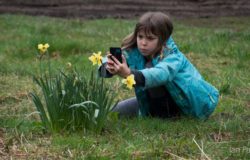
“This programme is an inspiration,” said the Jury, “a clever yet simple and practical way of involving young people at a particular site using photography and storytelling”. The National Trust for Land and Culture in British Columbia’s ‘Exploring the Lighthouse’ schools programme is largely run by volunteers and has involved 250 children over the first three years (and through them hundreds of family members). The programme takes one site, Sheringham Point Lighthouse, and expands ideas out of it that could be easily adopted by other INTO members. The Jury said that “this is such a good way to open everyone’s minds and to develop children’s life skills”.
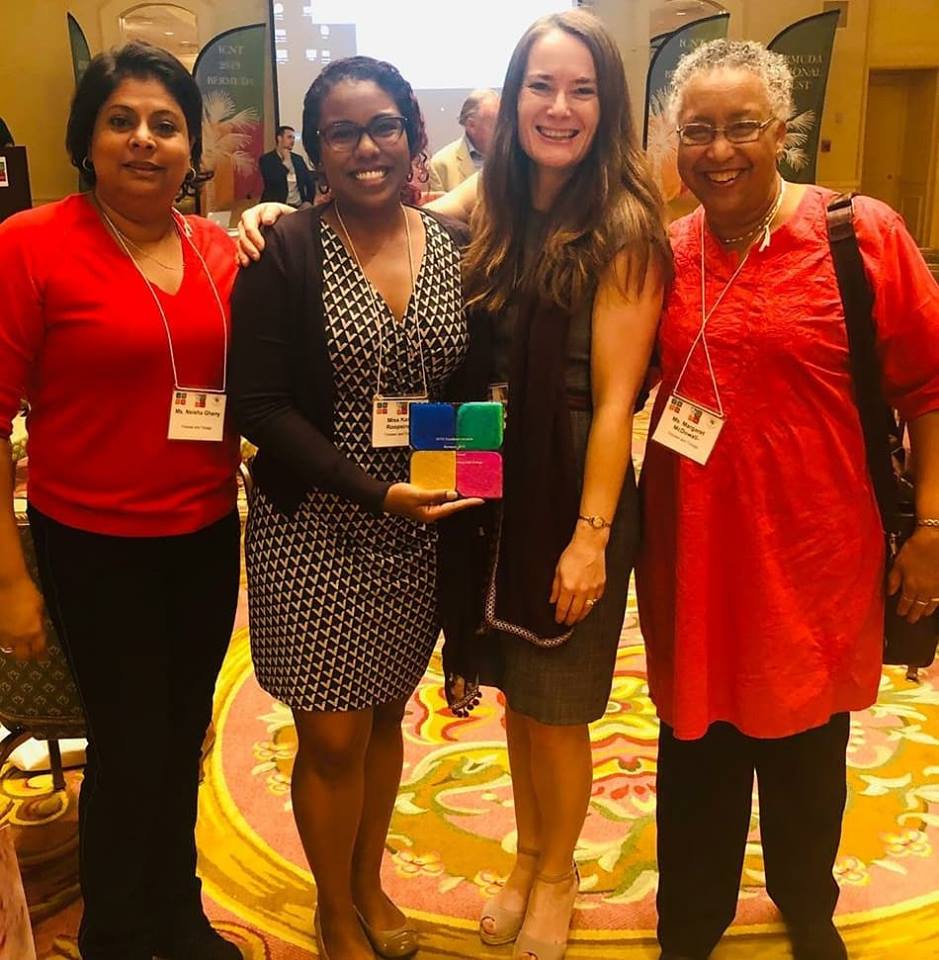
Winner: National Trust of Trinidad and Tobago
Our second winner was a very similar project in fact, even the names are similar. The Canadian programme talks about ‘Lighthouse Keepers’ whilst our joint-winner celebrates ‘Heritage Keepers’.
Having only embarked on phase one in June 2018, this is a less established initiative but the Jury thought it was a “fantastic project that both draws on and feeds into INTO’s experience with heritage clubs around the world”. This education programme seeks to ‘open the minds’ of the nation’s youth and open up opportunities within the multi-cultural, underfunded and not always very accessible heritage sector. The Jury was also excited by the way the National Trust of Trinidad and Tobago‘s ambitious programme seeks to “change people’s aspirations for the future and to grow the heritage profession”.
Open for Business: This Award will be presented to the INTO member organisation which has developed innovative approaches to the business of running a heritage trust, such as increasing and maintaining memberships, fundraising or visitor services.
Winner: National Trust for Jersey
The Jury was really struck by the winner’s courageous and business-like approach to this exciting regeneration project. The Trust built successful partnerships with other organisations and engaged local people in saving the property from demolition. It then went on to find new and financially sustainable uses for the site that could be replicated by other INTO members.
“The Trustees of National Trusts are generally fairly risk averse so this was a brave project by the National Trust for Jersey to save an important site in St Helier and to find a mixed, contemporary and economically sustainable new use for the Foot Buildings,” said the Jury.
This program of the National Trust for Land and Culture (British Columbia) engages up to 150 elementary school children (9-10 years) annually in learning about a cultural icon in their community, and the efforts being made to ensure its conservation, in ways that resonate and are relevant to them in their daily lives.
It encourages those children – and, through them, their families and friends – to participate in conservation measures in their community, highlighting and demonstrating the power of story-telling and self expression as a means of participation.

“Exploring the Lighthouse” is a school program delivered in partnership between the National Trust for Land & Culture (NTLCBC), the Sheringham Point Lighthouse Preservation Society (SPLPS) and Change Canada Consultants Ltd. (CCC).
It introduces elementary school age children (age 9-10) in the communities of Sooke and Shirley (British Columbia) with their own community’s history and heritage by connecting them with the Sheringham Point Lighthouse (a designated Canadian Heritage Lighthouse, built in 1912, and recently transferred to SPLPS for conservation and protection. Restoration of the lighthouse is currently underway, with the support of NTLCBC and CCC).
Now in its third year, the program has become an acknowledged and anticipated part of the school curriculum for the two (hoping to be three) participating schools. It involves up to 150 children in grades 3, 4 and 5. The program consists of the following elements:
a) Photography – each student is provided with a camera (cell phone camera, donated through NTLCBC) and, guided by one of our program leaders who is an experienced photographer, given the opportunity to take photographs of what they see and the details that catch their attention (both the structures and the surrounding environment).
b) Story-telling – the students gather as a group with one of our program leaders who is an experienced author of children’s books, and who talks with them about the power of story-telling, and how to structure and build a compelling story and narrative.
For more details about the program, and to view the on-line commemorative books, click here.

Children today have a greater range of opportunities open to them than at any time in recent history, and greater freedoms than ever before. Thriving in this chaotic environment requires an ability for all children to be able to find a strong foundation from which they can build their lives, achieve their full potential and realize their dreams.
For most of us, that foundation starts with the family, and extends outward into the community. Just as a tree needs deep roots to grow tall and strong, so does a child draw nourishment and vitality from his or her own roots, from the comfort of belonging, from having a place to call home.
Understanding and, in particular, experiencing their own connections to the people and places around them is invaluable for children in so many ways. Learning about their own and their community’s history provides a base from which they can explore their world and help them answer that most fundamental of questions: “how did this come to be?”
Our history – our heritage – is not just an academic pursuit to be left to historians. It’s not just about dates and obscure locations, nor is it just about great battles, world-shaking events, the comings and goings of kings and queens and presidents. It’s also about the lives of the people who lived here before, their struggles and triumphs, their thoughts and ideas that nurtured their families, built their communities and shaped their world. It’s about the stories our grandfathers told us, and those from our neighbours.
We all have stories in our lives and they are, in their way, as full of drama and intrigue as any of the great sagas of our history classes. It is our stories that shape us, that make us who we are.
Our history – our heritage – is best lived and experienced, understood through the things we can touch and feel, and passed on in a way that touches our hearts and our imaginations. It’s why we need to work hard to conserve and appreciate our heritage, not just the castles and stately mansions, but the cottages and the old lighthouses as well.
Those remnants of our past have stories to tell.
To help children in the local area strengthen their connections to their own community, we wanted to provide an opportunity for them to visit Sheringham Point Lighthouse, to learn about its history and operations, to appreciate its significance and understand why it is being conserved. It was also our hope to inspire them – and, through them, their families and friends – to take a personal interest in further exploring their community and helping to protect and celebrate the future of the Lighthouse.
“Exploring the Lighthouse” has, so far, engaged 250 children directly – and, through them, potentially a couple of thousand other family members and friends in understanding and participating in the conservation of community heritage resources. It reaches the children by harnessing their creativity, their curiosity and their own technologies, and applies those attributes to enhance our collective conservation work. The concept of heritage conservation is also now embedded in the curriculum of schools in this community and eagerly awaited each year by the next group of participants. In a sense, it is targeting and growing the next generation of active, concerned community members who see the conservation of their community’s heritage to be of value and to be engaged.

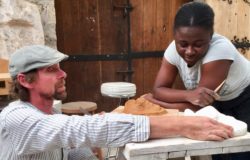
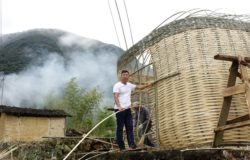
Artist Zeng Hanguang worked with local craftsman and used local bamboo and textiles for his artworks
The Ruan Yisan Heritage Foundation‘s Arts Harvest seeks to involve local people in the protection of traditional villages; to build common purpose with government, artists, local community, experts, and local gentries and to open rural villages to all people, bringing the local people back, and attracting new people from the cities.

Local people cleaning their “three wells” public space together
Beginning in the summer of 2018, Ruan Yisan Heritage Foundation (the “Foundation”) started working in JiuLong village after receiving an invitation from the village leader. At the onset of the project, there were many historical houses and complete landscapes existing in the traditional village. The Foundation talked to both the local people and local government and found that 80% of the village’s inhabitants had moved to cities and only older people were left. The Foundation created the concept of an “Art Harvest” to stimulate the local village people and attract people back from the cities.
The Foundation persuaded the local village and government to participate in the project and devote resources to its completion. At the commencement, nearly 30 artists were invited to work in residence to create works which would contribute to the objective of cultural heritage and to the future development of the village. The project also received support from the local gentries, 100 local volunteers who participated in the preparation and opening, local craftsman that worked with artists to finish artworks, and over 10 families that moved back from cities to operate their old houses as hostels and restaurants.
As a result of the Art Harvest, people began to understand the importance and tradition of wooden and clay houses and took pride in their village and recognised the importance of protecting their own heritage. The opening of the village through the Art Harvest project attracted people and organisations to contribute volunteer hours and monetary investment. A once silent village with no children laughing and no hope has now been awoken by everyone who contributed to the Art Harvest project and people visiting from the outside. Nearly 5,000 people attended the opening day and the village enjoys between 50-100 visitors each day. Most importantly, the local people and gentries are collaborating on a plan for the future of the village now, a future which used to be non-existent due to abandonment.

The Art Harvest project successfully engaged the local communities to participate in the process of planning, organising and executing the project for the past year. The local government played an important active role in the project, in addition to supporting the project financially. The artists invited by the Foundation were the most vivid part of the project as their passion and hard work touched the local people and inspired them to realise the value of the traditional village and lifestyle. The Art Harvest made the village open to the outside world, attracting people from cities like Shanghai, Fuzhou, and Xiamen, and foreign countries like France, the Netherlands, the United Kingdom, and the United States. Because of the Art Harvest and other arts and heritage projects, people started valuing the past and talked about the future of traditional villages and historical buildings. Without this work, the predictable outcome is the disappearance of historical buildings and traditional villages. But now, thanks to engagement of the community through the Art Harvest, the village can expect another future, “Forever, for everyone”.

National Trust of Tasmania (NTT) is one of the smallest National Trust organisations in Australia, yet it achieves outstanding successes with limited funding and resources. NTT is a forward-thinking, innovative organisation which ensures the National Trust frequently surprises its visitors with its creative approach.
Once again, NTT has stepped away from traditional ‘National Trust’ interpretation by presenting Pandemonium, a world-class, multi-sensory film experience which is screened at the Penitentiary Chapel Historic Site (PCHS) in Hobart.
Pandemonium is a fast-moving, engaging, visual and auditory feast, presenting crime and punishment stories of Tasmanian convicts.
NTT entered into a collaborative partnership with Roar Film to develop a world-class film unlike any tourism experience that has previously been offered in Tasmania.
Roar Film is one of Australia’s most creative and enduring production companies. They work across the digital media spectrum, with credits that span broadcast and online documentary and drama, educational content and musical theatre.
Between 1803 and 1853, around 60,000 male convicts were sent to Van Diemen’s Land. Most of them were processed at the Hobart Penitentiary Chapel Site. Pandemonium tells their story projected 21 metres wide and 4 metres in height on the walls of John Lee Archer’s Penitentiary Chapel. You will meet a line-up of buz-coves, bit-fakers, nibblers and other motley lags in this luscious evocation of Cinerama.
PCHS is one of the most important sites in Tasmania’s convict system and it was the intention of the project to enhance the physical and emotional experience through storytelling and technology, satisfying a diverse cross-section of visitors. This in turn would increase visitors and revenue.
NTT applied and received a grant from the Tasmanian Community Fund and was fortunate to receive funding of $272,270. The overall cost was just under $400,000. To construct this highly technical, audio/visual project in our historic site required a sensitive and sympathetic approach, and necessitated approval from Heritage Tasmania. The Chapel, where the film is screened, was not an easy space to work in, with its extremely high ceilings and tiered seating.
The project took 37 months to complete from inception to delivery.

PCHS is a magnificent heritage building in its own right, with courtrooms, gallows, chapel, cells and visual displays. NTT has pushed the boundaries of what visitors expect to see at a National Trust site with the screening of Pandemonium at PCHS.
Pandemonium is an extraordinary and innovative film – an all-encompassing, sensory experience which transports the viewer into convict life.
Pandemonium has attracted new visitors to PCHS who have walked away from the film with a new and inspired opinion of what a National Trust property can offer them in terms of learning about our convict past.
We believe we have unquestionably aligned with the criteria of this category, in creatively reimagining our heritage asset and making it more accessible and relevant to today’s society.
More pictures can be found here.

The National Trust for Jersey‘s work at the Foot Buildings demonstrates how an alternative and feasible vision can prevent the loss of historic buildings; the importance of establishing key partnerships and securing the support of national organisations and is a classic example of a successful heritage led regeneration which secures public access and enjoyment.

After a 10 year long journey of campaigning and 18 months of renovation the three derelict buildings known colloquially as the Foot Buildings have been transformed into three apartments, a café and a local art gallery studio. None of this would have been possible without a great deal of support and team work. From the initial campaigning with Save Jersey’s Heritage, to the donation of the buildings from the Channel islands Co-operative Society, to the generous financial bequests, to the architectural guidance of historic building consultants and the informed guidance of our engineers, Quantity Surveyors, Buildings Contractors and the excellent craftsmanship of the Trust’s Properties Team.
The Trust properties border a renovated Pitt Street which has been resurfaced and transformed into a “Street of Light” as part of a Percentage for Art scheme financed by the Co-operative Society, who have also opened a Co-operative grocery store, with a new Premier Inn occupying the other corner of the site.
A stroll along the Street of Light leads you to “Lockes” Café serving food and coffee al fresco, an Art Shop displaying local art works and 3 apartments full of period detail and character with families ‘living above the shop’. This enables a wider audience to experience built heritage as part of their everyday lives, as historic buildings provide a hugely important resource for new small startup businesses and creative enterprises.
Without doubt this project has come at a high price in relation to the Trust’s limited resources, but it serves as an example of how partnerships can deliver successful heritage regeneration for St Helier. It is no longer acceptable or justifiable for developers to simply argue that historic buildings have to be demolished to make way for large scale development. With some imagination, compromise and good design, it is possible to safeguard our heritage, as well as provide scope for new build.
Whilst the total cost of renovation has been high for the Trust £1.4m, The Trust is now benefiting from rental income from the Lockes café, the three residential flats and the art gallery which will generate in the region of £80,000 per annum securing a regular and sustainable income for the Trust. This together with a successful heritage led campaign and regeneration programme demonstrates how creative thinking, campaigning, sheer determination and team work can make heritage assets more accessible and relevant in today’s society.

To secure and demonstrate public support for the retention of the buildings so that both the owners of the site, The Channel Islands Co-operative Society, and the States of Jersey Planning Department would consider an alternative heritage led regeneration scheme. The Trust worked with Save Jersey’s Heritage, to establish a professional team including an Architect, Quantity Surveyor, Chartered Surveyor and conservation consultant (all volunteers) to develop such a scheme which was economically feasible. This was then published in a brochure and launched to both the public and local media at the Parish Hall.
Support was also secured from a number of national organisations including INTO, The Prince’s Regeneration Trust and The Georgian Group to emphasise that the project was of interest to national conservation groups outside the Island.
A petition was staged though Change.org which easily engaged the public at no cost to the Trust.
Following on from the campaign the following progress was made:-
Read more about the project here and photos here.

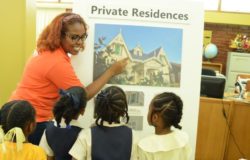
The Heritage Keeper at its core it “opens the minds” of the nation’s youth (18yrs and younger) through education about historic sites. In T&T the youth are often given the message that to be successful one must be a doctor or a lawyer or that interest in heritage is for the senior citizens. It opens up opportunities for engaging with the heritage sector through careers or volunteer work.
The Heritage Keepers programme creates longevity and relevance of the work of the National Trust of T&T through youth engagement. Trinidad and Tobago’s Heritage is multi-cultural and varied, underfunded, and the information and resources are not widely accessible. The Heritage Keepers programme invigorates new interest among a previously untapped age bracket which is slowly changing the national rhetoric.
The National Trust of T&T has successfully created a movement of youth advocacy and empowerment through the Heritage Keepers Programme through the creation of Heritage Clubs in schools across the country.

Established by Act No.11 of 1991 the National Trust of Trinidad and Tobago is the national agency responsible for safeguarding the tangible heritage of Trinidad and Tobago. The National Trust is part of the Ministry of Planning and Development of the Republic of Trinidad and Tobago. The Trust is a membership based organisation responsible for the preservation of our natural and built heritage of Trinidad and Tobago. It engages the public and members by creating access to heritage sites through tours, publications and education and outreach programmes, as well as engaging volunteers. The National Trust of Trinidad and Tobago, has created a vibrant youth programme entitled “Heritage Keepers”. This project is designed and named to bring a sense of ownership and responsibility to the youth as a “Keeper” of Heritage. The project is being done is phases with the first phase completed in June 2018 which introduces the concepts of heritage and to local and national heritage sites using the Details Exhibition. Phase two, launched in September 2018, builds on the introduction through creative and educational contact through the establishment of heritage clubs. Phase three is to generate interest in the heritage sector and thus produce heritage professionals.
1) Plan site visits to heritage sites
2) Volunteer with the National Trust of T&T
3) Plan school lectures relevant to heritage places
4) Storytelling
5) Heritage Photography
6) Various Workshops on restoration, architecture and conservation.
The Heritage Keeper project has both a theoretical and practical approach that has stimulated the minds of the nation’s youth who have already become involved in the project. The educational aspect of this project is quite dynamic as younger children are approached differently to that of the older children. The tours and events that are part of the Heritage Keeper project seek to broaden the minds of the participants. The launch of this project occurred in June 12th, 2018 in Charlotteville Tobago. The activity called “Heritage Hunt” was a part of the launch where the participants were invited to “hunt” for heritage architecture in a volunteer photography exhibition entitled Details: A Closer Look at the Built and Natural Heritage of Trinidad and Tobago** which engages the youth in the visual, the written descriptions and the purpose of the architectural detail.
Students were also asked to draw their versions of heritage architecture. The Charlotteville Methodist Primary and the Charlottville S.D.A. Primary Schools in Tobago were the first schools to be introduced to the National Trust’s Heritage Keepers project.
The project is a perfect fit for consideration as the youth who are already involved have been exposed to tours and events and have influenced the teachers in their schools to establish a more permanent relationship with the National Trust of Trinidad and Tobago. The Heritage Keeper project is designed in such a way that the youth interface with the Heritage sites on a personal level. There have been tours, lectures and events tailored to the needs of the youth. For example, a tour entitled “Old and New Capital” took the participants around the First Capital of Trinidad, St Joseph, into the current capital which is Port of Spain. This has been the catalyst for the phase two of the project in establishing a Heritage Club at the St. Joseph R.C. School.
Heritage preservation is very important and should not only come to the fore when a site is in danger of demolition. Having the nation’s youth involved in the Heritage sector would continue the conversation of heritage and its preservation and sites for generations to come. Informing, educating and advocating is what the Heritage Keepers project is focused on while giving the individual that sense of responsibility for their heritage and the site itself.
Category criteriaWhen analysing the various criteria for this award the Heritage Keeper project has shown success in the field of education with specific emphasis on the youth (18yrs and under). Also, the skills and talents of the staff and volunteers are employed to assist in the education and advocacy processes of the Heritage Keeper project. This project, even in its infancy has yielded success in keeping the work of the National Trust of Trinidad and Tobago relevant in this age where content is available at the click of a button.
The work of the National Trust of Trinidad and Tobago encompasses the preservation and conservation of our natural and built heritage. This occurs on several levels as our Heritage Preservation and Research Officers work assiduously on the listing of the heritage sites and conduct various site visits to ensure the proper upkeep on the sites. The Heritage Keeper project though it falls under outreach and education, employ the expertise of the staff attached to Heritage Preservation and Research in various ways to ensure the proper techniques are passed on the participants in the project.
The educational element of the Heritage Keeper project is the major focus of the project. Education about historic architecture, heritage sites etc is delivered in a fun and creative way to capture the youth. Working closely with the requirements of the national education syllabus, topics such as History, Social Studies and National Pride are used as points of entry for the youth to get involved and become a heritage keeper. Instead of learning about the Magnificent Seven in the class room, a Heritage Keeper has the opportunity to visit each and have a tour of some of these heritage sites. Projects from the Resource Guide (Resource Guide explained in appendix) are used to engage the students. The glossary of 28 historic architectural terms in the Details Resource Guide is used alongside the Details Exhibition to expose the students to the terms and what they look like on a historic property.
Persons who have written extensively on the History of Trinidad and Tobago and whose work is used as part of the required reading are invited to lecture and take questions under the National Trust Youth Program. Students, having been exposed to lectures, tours and events have signed up as members of the National Trust of T&T and have advocated for Heritage Clubs in their schools.
The aim is to establish vibrant heritage clubs who can safeguard and protect the local heritage and become passionate about the preservation of the Heritage of Trinidad and Tobago in at least 20 schools in the country. On the island of Trinidad several schools and youth groups have been exposed to the Heritage Keepers and the numbers continue to grow as we are getting more requests for heritage clubs in schools.
You can read more about the project here.

The National Trust of Guernsey works to satisfy the purposes set out by its founder members and imagines they would be proud that Les Caches Farm stands out as the Trust’s newest public face. All heritage organisations share the dilemma of putting their aims and objectives into practice while facing uncertainty over issues, often outside their control, such as regulation, funding and reliance on volunteers. Les Caches Farm has been a success despite such challenges.
The potential for Les Caches Farm to offer new activities whilst remaining true to its acknowledged place in local history is substantial, and merits recognition.
SummaryThe National Trust of Guernsey (NTG) was established in 1960 when a dedicated group of individuals, concerned that the natural beauty of the Island was at risk from inappropriate development, formed an Association to arouse public interest in the subject, to preserve buildings of architectural and/or historical merit and to own property which should be preserved.
One of three public-facing properties managed by NTG, the site of Les Caches Farm, generously bequeathed to the Trust by Ruth Le Huray in 1993, lies in the rural setting of Les Villets, a hamlet in the Parish of the Forest. Comprising five buildings in varying degrees of neglect or ruin, including a mid-19th century Guernsey farmhouse (Les Caches Farm), a 15th century farmhouse (Les Caches Barn), a cider press barn and associated outbuildings, a twenty year project to restore and conserve the buildings is now complete. All site buildings are considered to be fine examples of their original purpose and style and have been returned to active use.
In 2009, the restored Les Caches Barn opened to the public, with limited practical use, serving as an annexe to the NTG’s Folk and Costume Museum, rather than being identified as a distinct venue with its own prospects. During the last three years, the site’s potential to serve several further purposes has been recognised. 2014 saw the completed restoration of all the heritage buildings at the site, after which attention turned to the enhancement of outlying agricultural areas. In 2017, as part of a community project with Forest Primary School children and in partnership with four Island organisations, the NTG planted an apple orchard in an area at Les Caches Farm, previously recorded in the 1787 Duke of Richmond map, as a cider apple orchard.
Since 2017, the NTG has been working with representatives from La Société Guernesiaise, a local learned society, to understand better the site’s biodiversity and to establish the most appropriate means of land management. NTG is also working with the local award-winning Pollinator Project to enhance biodiversity potential and educational opportunities at Les Caches Farm.
A nearby reed bed is within a designated Site of Special Significance. Two adjacent fields, which have most recently been used for hay-making or the grazing of sheep, offer enormous scope for the study of nature and wildlife. Indeed, as birds, insects and small mammals are constant visitors to this natural environment, the grounds of Les Caches Farm were used during the summer of 2018 as part of a university Master’s research study into the behavior and habitat of Guernsey’s small mammals.
The Les Caches Farm site, with its restored and refurbished buildings and contents, all in their natural setting and open to NTG Members and the visiting public alike, demonstrates that NTG has fully satisfied its general purposes of preservation, restoration, enhancement, protection and exhibition as set out in the National Trust of Guernsey (Incorporation) Law, 1967.

Download the full application here.

The REMPART movement was set up in 1966, simultaneously to the growing of the heritage consciousness among French society, to enable volunteers who had contributed to saving a monument in local groups, to exchange their experiences and so to strengthen their means of action. It was also an opportunity for those who could undertake such work to take part in the activities organized by others. More than fifty years later, based on the number of heritage sites under its care and the extent of its field of action, REMPART became the leading national movement operating in a hand-on and organized way for the preservation and restoration of heritage sites. In addition to achieving national recognition, it is now also developing internationally. In 2018, close to 3 500 volunteers were involved in roughly 300 “heritage missions”, hands-on trainings, restoration voluntary workcamps, and long-term volunteering… The movement also counts 10 000 citizen involved locally to reinvigorate “their” sites.
In order to share its love for know-hows and its vision for a shared and common heritage, REMPART develops several programme amongst which “Social Inclusion and action for Heritage”. “Social Inclusion and action for Heritage” is one of the bets achievements of REMPART. It demonstrates the capacity of the organization to answer social needs and to keep open to wide range of challenges that heritage can help to address.

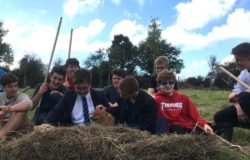
Based on the ideas that heritage has a strong power to bring diverse people together as well as rewarding effect on those who take care of it, REMPART has developed a special programme oriented to young people with fewer opportunities. Started in 2011, the project was disseminated to more and more French regions where REMPART is active and is entitled “Inclusion mobility for Heritage Action”. It consists in reaching out to young people between 17 and 25 years of age, who have dropped out of school or are job-seekers followed up by local back-to-work structures such at the Missions locales. Most often facing social obstacles and economic difficulties, these young people deserve as everyone to experience mobility, volunteering, interculturality thanks to a great and useful time at a heritage sites. The action gets these young people involved in heritage and familiarizes them with the associated trades. This way they acquire and develop human and technical skills by taking part in volunteer work camps restoring heritage sites or buildings.
The programme is supported by public bodies and private partners such as the Heritage foundation and the Hermès Foundation. This support is by instance part of the line of action entitled ‘discovery and transmission of artistic and craft know-how, in particular aimed at young people from disadvantaged backgrounds’, developed by the Hermès foundation.
The programme consist in a three steps approach that we implement with local social structures in charge of helping youth in jobs and orientation research. The 1st step is an information interactive session on what’s heritage, what’s an association, what’s heritage restoration. The 2nd step is an invitation to attend a “Discovery heritage day” hosted and designed by a REMPART member, on its site. The participants, in group, will experience a restoration work under the supervision of a REMPART technical leader. The idea is to spend the full day with the group, to discover heritage restoration materials, tools. It is also a chance to discover a site impregned with history and its team, a group life… If the experience is conclusive, REMPART offers the participants a full stay of two weeks in a voluntary heritage workcamp. REMPART wanted to make the experience valuable for participants and designed a certificate where competences and skills acquired are valorized as part of a non-formal learning process : artistic and cultural skills, ability to take part in a collective project, sense of initiative, etc. The certificate is delivered during a non-formal ceremony organized within the partner structures.
Thanks to this scheme, we have been able to attract young people whom social background would have kept away from a volunteer experience with heritage. We are proud to have contributed to a better inclusion of more than 450 young people and as such to have helped our members to work their access for all abilities … Since 2011, 50 social institutions were involved in our scheme and help to bring 1700 young people to step 1, 900 to step 2, and 480 to step 3 !

A REMPART workcamp experience is above all a way of embracing the idea of ‘Forever, for everyone’, but this project is particularly relevant in what it helps people from different backgrounds to meet and do something visible for the heritage. We measure a double impact of the project. First on participants themselves and second on participating organizations members of REMPART during and after the “workcamp” lifetime ; Today, the project is being disseminating in new regions in France, allowing more young people to be involved and more REMPART members to increase their social inclusion capacity and understanding. Equipping our youth occasional workers with more competences and methods needed for transferring the fundamental values of REMPART to the hard to reach young people is now part of the new challenges we have to tackle.
Our activities on heritage and heritage volunteering based project also significantly contribute to address the needs of refugees, asylum seekers and migrants and increase awareness about this issue within local communities.